
Many people researching cosmetic breast surgery come across two procedures that may seem similar: breast lift surgery and breast reduction surgery. Because both reshape the breasts and improve their position, it’s common to assume they serve the same purpose. In reality, each procedure addresses different concerns and goals.
Understanding the difference between a breast lift and a breast reduction can help you determine which option may be right for you. In some cases, the best results come from combining both techniques to achieve balanced, comfortable, and natural-looking outcomes.
What Is a Breast Lift?
A breast lift, or mastopexy. focuses on improving the position and shape of the breasts without significantly changing their size.
Over time, factors such as pregnancy, weight fluctuations, aging, and gravity can cause the breasts to lose firmness and begin to sag. During a breast lift procedure, a plastic surgeon reshapes the underlying breast tissue and removes excess skin to elevate the breasts to a more youthful position on the chest.
The nipple and areola are also repositioned to sit more naturally on the breast mound.
You may be a good candidate for a breast lift if you:
- Are generally happy with your breast size
- Notice sagging or drooping breasts
- Have nipples that point downward or sit below the breast crease
- Want a more lifted and youthful breast shape
If your primary concern is sagging rather than size, a breast lift may provide the improvement you are looking for.
WARNING:
This feature contains nudity. Please click OK to confirm you are at least 18 years of age and are not offended by such material.


What Is a Breast Reduction?
A breast reduction, or reduction mammaplasty, addresses a different concern: breasts that feel too large, heavy, or uncomfortable.
During breast reduction surgery, excess breast tissue, fat, and skin are removed to reduce the size and weight of the breasts. At the same time, the breasts are lifted and reshaped, improving both comfort and appearance.
You may benefit from breast reduction surgery if you experience:
- Chronic neck, shoulder, or back pain
- Shoulder grooves from bra straps
- Skin irritation beneath the breasts
- Difficulty exercising or finding well-fitting clothing
- A feeling that your breasts are disproportionately large for your frame
While a reduction does lift the breasts, its primary goal is to decrease size and weight while improving proportion.
WARNING:
This feature contains nudity. Please click OK to confirm you are at least 18 years of age and are not offended by such material.


When Combining a Breast Lift With Reduction Makes Sense
For some patients, the most effective approach is combining a breast lift with a reduction, especially when the breasts are both sagging and overly large or heavy. In these cases, lifting alone may not create the most comfortable or balanced result.
Combining the procedures allows the surgeon to:
- Reduce excess breast tissue and weight
- Elevate the breasts to a more youthful position
- Reshape the breast contour
- Improve overall body proportions
The result is a more lifted appearance with improved comfort and balance.
WARNING:
This feature contains nudity. Please click OK to confirm you are at least 18 years of age and are not offended by such material.


How To Tell Which Procedure You May Need
If you’re unsure whether a breast lift, breast reduction, or both may be right for you, it helps to focus on your primary concerns.
You may be a candidate for a breast lift if:
- You are happy with your breast size but want to correct sagging
- Your breasts have lost firmness after pregnancy or weight loss
- Your nipples point downward or sit lower on the breast
You may benefit from a breast reduction if:
- Your breasts feel too large or heavy
- You experience physical discomfort related to breast size
- You want smaller, lighter breasts that better fit your frame
Some patients benefit from both procedures if their breasts are large, heavy, and sagging at the same time.
Why a Consultation Matters
The best way to determine the right procedure is through a consultation with a board-certified plastic surgeon.
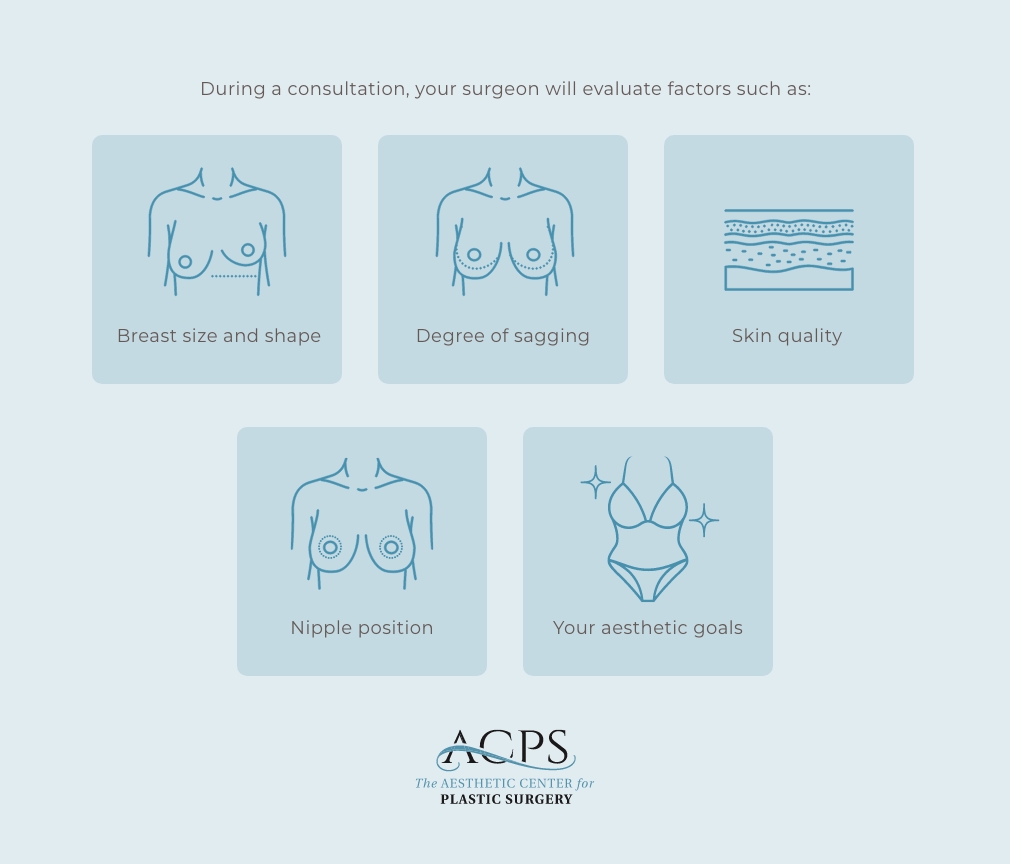
Based on this assessment, they can recommend a customized surgical plan designed to achieve natural, proportional results.
At The Aesthetic Center for Plastic Surgery, consultations give patients the opportunity to discuss their concerns, understand their options, and develop a plan that aligns with their body and goals. You can request a consultation using our online form or call (713) 799-9999 to schedule an appointment.



Leave a Reply