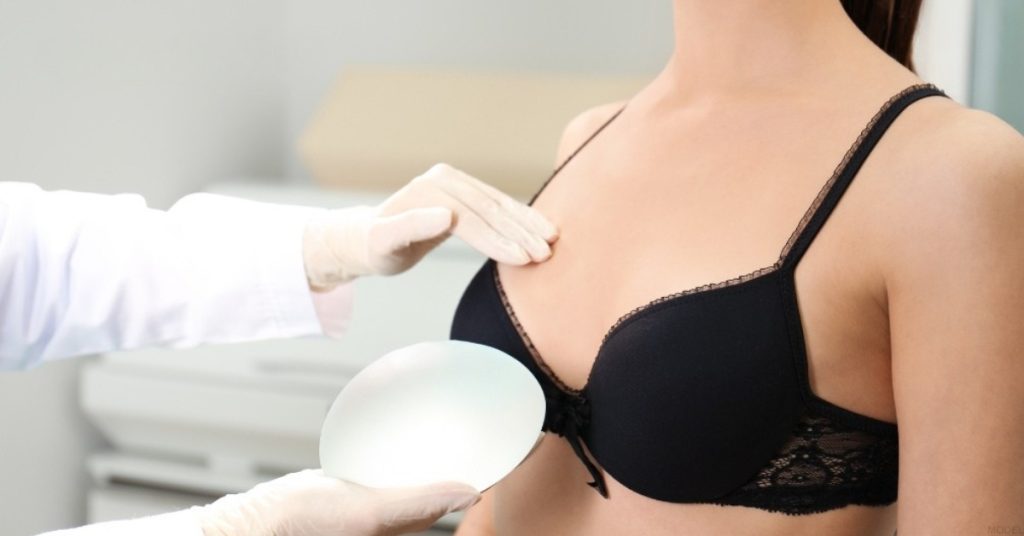
Breast implants are not considered lifetime devices, but they are designed to be long-lasting. Most breast implants last 10 to 20 years or longer, and many women enjoy beautiful, durable results for decades after breast augmentation with silicone or saline implants.
Over time, implants may need to be replaced to maintain safety, comfort, or appearance. Some women choose implant replacement due to natural changes in the body, while others update their implants as aesthetic preferences evolve.
The board-certified plastic surgeons at the Aesthetic Center for Plastic Surgery (ACPS) specialize in personalized breast augmentation and implant replacement. We help patients understand how long breast implants last, recognize signs that replacement may be needed, and make informed decisions about their care.
How Long Do Silicone Breast Implants Last?
On average, silicone gel breast implants last 15 to 20 years or longer, depending on the individual and how the implants age over time. While silicone implants are highly durable, they are not designed to last forever.
As implants age, the outer shell may weaken or rupture, sometimes without obvious symptoms. For this reason, routine monitoring and imaging are essential. If a rupture or other issue is detected, your surgeon may recommend breast implant removal (explantation) or breast augmentation revision (replacement) to restore safety and aesthetics.
Another potential concern is capsular contracture,, a condition in which scar tissue surrounding the implant tightens and hardens. This can cause discomfort, changes in breast shape, or firmness. If you notice pain, tightness, or distortion, it’s important to schedule an evaluation promptly.
How Long Do Saline Breast Implants Last?
Saline breast implants typically last 10 to 15 years, although some may last longer. Over time, the implant shell can weaken and leak, leading to visible deflation. When this occurs, the sterile saline solution is safely absorbed by the body, but the breast loses volume and usually requires implant replacement.
Like silicone implants, saline implants can also be affected by capsular contracture. Signs may include increasing firmness, discomfort, or changes in breast shape. Any sudden size changes or deflation should be evaluated by a board-certified plastic surgeon to determine the best next steps.
Saline vs Silicone Implant Removal: A Quick Comparison
|
Category |
Silicone Breast Implants |
Saline Breast Implants |
|
Filled With |
Cohesive silicone gel |
Sterile saltwater |
|
Average Longevity |
Typically 15–20+ years, depending on anatomy, lifestyle, and implant care |
Typically 10–15+ years |
|
What Happens If They Rupture? |
This is often a “silent rupture” — changes may be subtle or not immediately noticeable |
The breast usually deflates quickly and becomes visibly smaller |
|
Monitoring Needs |
Periodic imaging (ultrasound or MRI) is recommended to check for rupture |
Ruptures are usually obvious and don’t require imaging to detect |
|
Replacement Triggers |
Rupture, capsular contracture, aesthetic changes, and personal preference |
Deflation, capsular contracture, aesthetic changes, and personal preference |
Breast augmentation results vary based on implant type, surgical technique, and individual anatomy. Below are before-and-after examples of breast augmentation results achieved by the board-certified plastic surgeons at The Aesthetic Center for Plastic Surgery in Houston, TX.
WARNING:
This feature contains nudity. Please click OK to confirm you are at least 18 years of age and are not offended by such material.


What Factors Influence Implant Longevity?
While breast implants are designed to be durable, several variables play a role in how long they last. Ultimately, implant performance isn’t determined by one factor alone. Rather, a combination of variables impacts how your breasts change over time. These include:
- Implant type (saline vs. silicone)
- Implant placement (above vs. below the muscle)
- Surgical technique
- Individual healing and tissue quality
- Lifestyle factors and aging
- Pregnancy or significant weight changes
Understanding these influences can help set realistic expectations and guide long-term follow-up care with your surgeon.
How Often to Remove or Replace Breast Implants?
There is no fixed timeline for breast implant removal or replacement. Instead, most surgeons recommend regular implant evaluations every 2 to 3 years, which may include physical exams and imaging to check for rupture or leakage.
You should contact your surgeon if you notice any of the following warning signs:
- Hardening or tightening
- Changes in shape or position
- Pain, swelling, or discomfort
- Visible rippling or wrinkling
- Sudden deflation
- Lumps around the implant
- Imaging results indicating rupture or leakage
If you’ve experienced breast discomfort or changes, you may qualify for our capsular contracture clinical study, which investigates technologies that may enhance recovery and reduce the likelihood of recurrence.
Thinking About Breast Implants or Replacement?
Whether you’re considering breast augmentation for the first time or exploring implant replacement, monitoring, or removal, a private consultation with one of our board-certified plastic surgeons can provide clarity and confidence.
Request a consultation with our breast augmentation experts in Houston by completing the online form or calling us at (713) 799-9999. We’re here to answer your questions and provide personalized guidance every step of the way.
Click here to see our pricing list.
Serving Houston, The Woodlands, Sugar Land, Katy, Friendswood, Pearland, League City, Richmond, Spring, Humble, Kingwood, Stafford, Cypress, Fulshear, Missouri City, River Oaks, Piney Point, Hunters Creek, Memorial Close In, Bunker Hill, Southside Place, Afton Oaks, Tanglewood, Crestwoods and all other surrounding Greater Houston, Texas communities and more.
This blog post was originally published in February 2023 and updated in January 2026.




Leave a Reply